
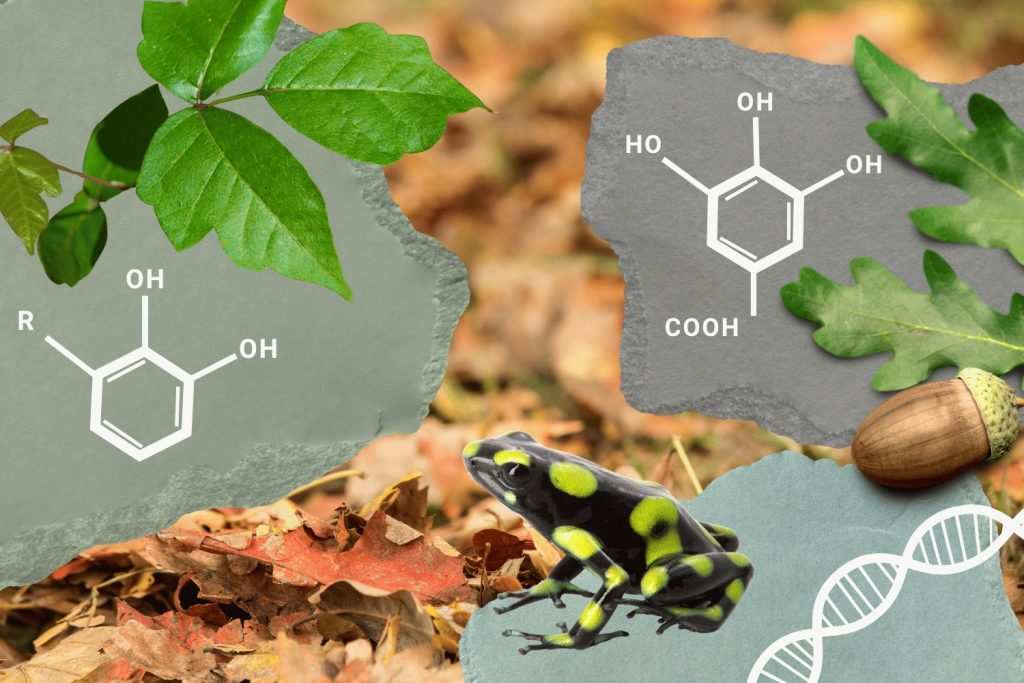
What does poison actually do inside your body? The answer lies in the fascinating field of biochemistry—a hidden world shaping everything we do, yet one most of us can’t see or explain. The challenge is making it both understandable and engaging for all ages.
Why Biochemistry Can Feel Out of Reach
Biochemistry is the science of how living systems work at a molecular level, from how enzymes catalyse reactions to how toxins and medicines interact with the body. While often associated with academic or medical settings, these processes shape everyday experiences, from how we digest food to how poisons disrupt biological systems.
Despite its relevance, biochemistry remains one of the most abstract areas of science for public audiences. Key concepts like enzyme activity, protein structure, and toxin metabolism occur at a scale we cannot see, making them difficult to communicate in engaging and accessible ways.
This creates both a challenge and an opportunity for science centers. Guests are curious about how science connects to their daily lives, but without effective translation, complex topics like molecular biology can feel out of reach. This gap between curiosity and comprehension is a recurring challenge for institutions working with molecular science content.
Science communicators play a critical role in bridging this gap. However, many lack confidence in explaining higher-level biochemical concepts, highlighting the need for targeted professional development. By equipping staff with both content knowledge and communication strategies, informal education spaces can make advanced science more approachable and impactful for diverse audiences.
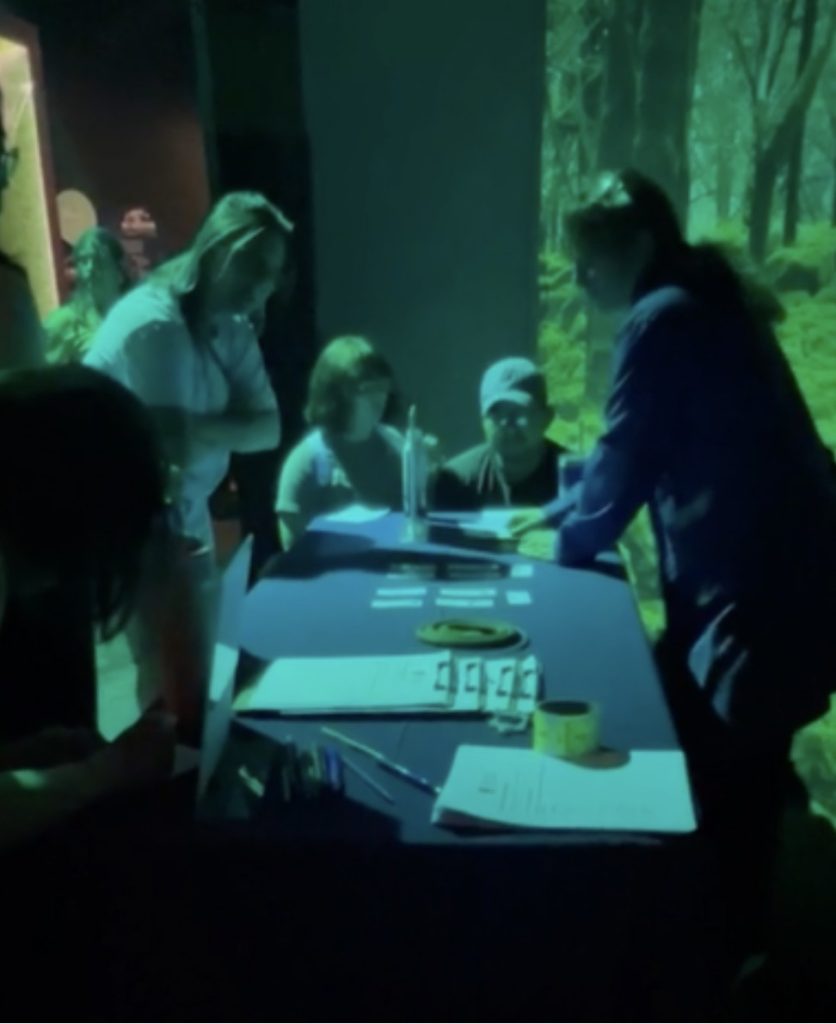
Guests engage with biochemistry through hands-on activities. Credit: Sam Gibbons and Rebecca Berger
Turning an Exhibition into an Interactive Journey
At Arizona Science Center, this work was embedded within The Power of Poison exhibition, developed by the American Museum of Natural History. The exhibition explores how toxins affect biological systems, providing an ideal entry point for discussing biochemistry in real-world contexts.
To support this exhibit experience, I developed an interactive workshop for guests that extended concepts within the exhibition into hands-on learning. Activities focused on topics such as protein function, toxin-receptor interactions, and molecular adaptations. Guests engaged in guided discussions, problem-solving tasks, and real-world case studies through four interactive stations to receive a stamp in their Poison Passport. This aimed to encourage learners to think critically about molecular processes and become excited about learning biochemistry.
Workshops followed a four-station format and were supported by trained facilitators. Local Arizona species were prioritized to reflect place-based learning and ecological relevance.
Station 1: Poison Passport Collection
The first station facilitated the collection of their Poison Passport booklet as a keepsake. Reflection and documentation activities are shown to increase retention and promote metacognitive awareness in informal science environments (Chen et al., 2023; Ratnayake et al., 2023). Additionally, a laptop was available in case guests had questions that facilitators could not answer. Facilitators were encouraged to show guests how to research reliable scientific papers to ultimately increase scientific literacy. Volunteers and staff were advised to verbally ask guests, prior to completing the activities, what they thought biochemistry meant, whether that be a definition or listing examples.

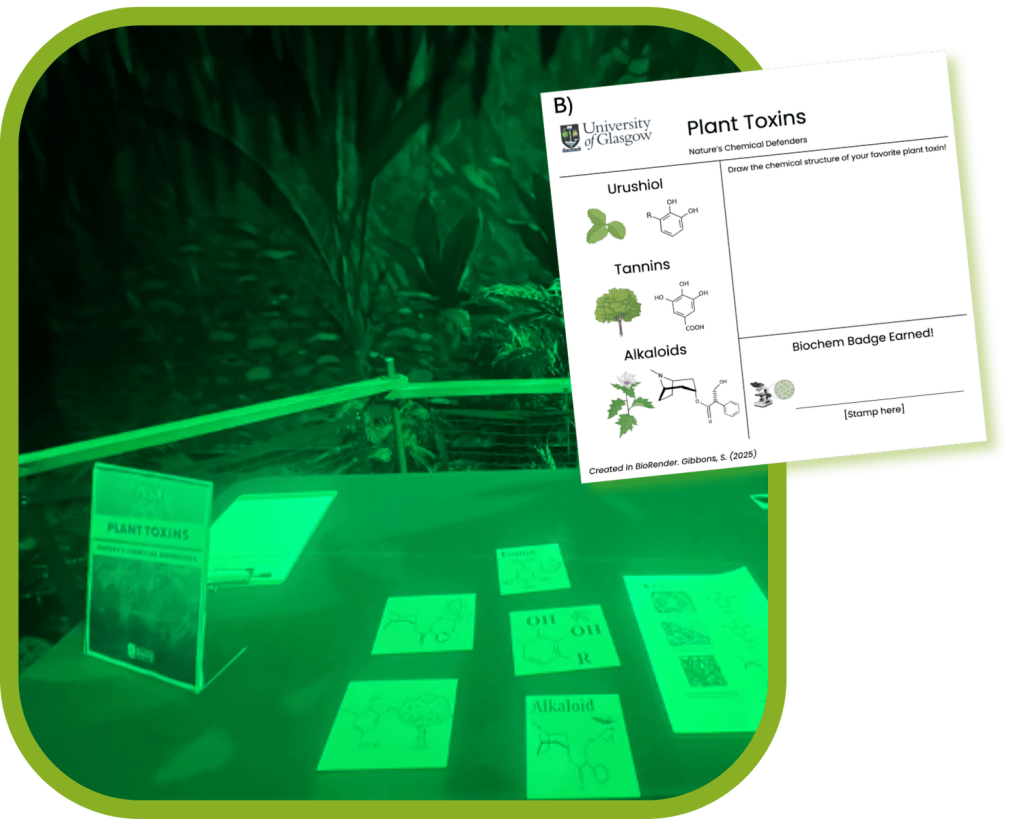
Station 2: Plant Toxins, Nature’s Chemical Defenders
This station introduced participants to the biochemical roles of urushiol, tannins, and alkaloids in plant defense, as displayed in The Power of Poison exhibition. The Poison Passport task required participants to sketch a chemical structure, reinforcing kinesthetic and visual learning and enhancing vocabulary retention. This station emphasized cause and effect relationships between molecular properties and physiological outcomes, laying a biochemical foundation for subsequent activities and supporting conceptual systems-thinking strategy.
Station 3: The Superpower of the Southern Grasshopper Mouse
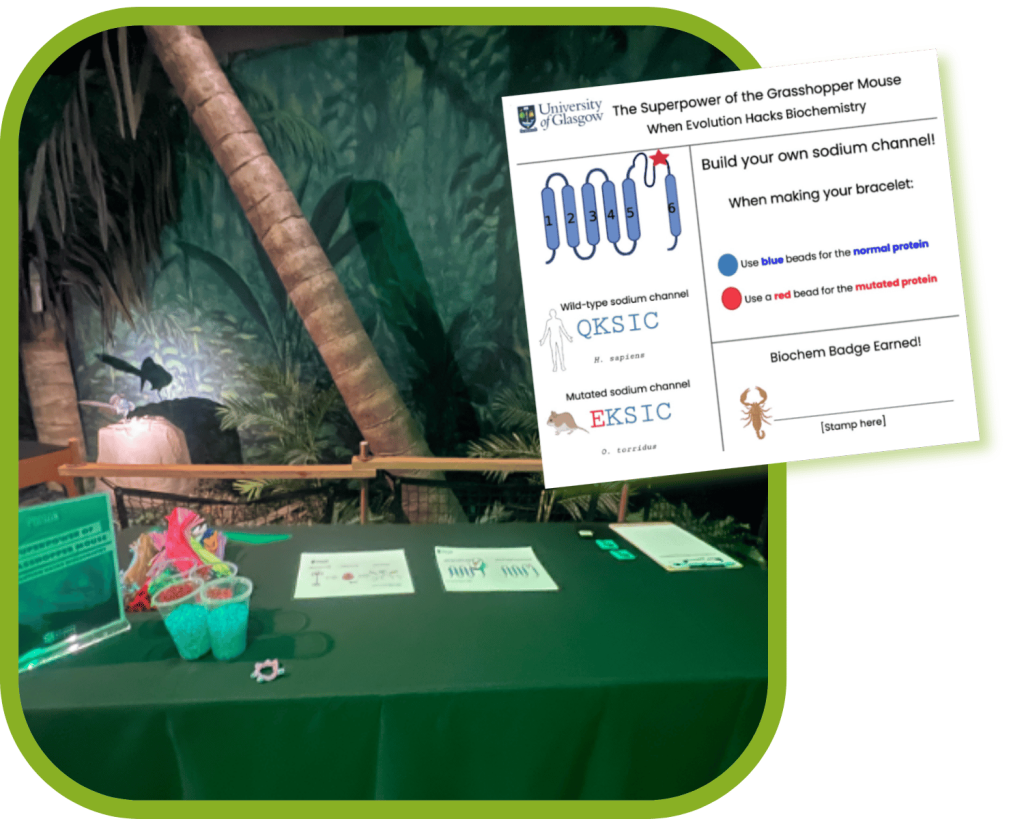
This activity highlighted how two amino acid substitutions in sodium channels allow the southern grasshopper mouse to resist scorpion venom. Participants learned about neurons, sodium channels, and action potentials, tested venom binding using an interactive magnetic model, and built model sodium channels using pipe cleaners and beads. This hands-on construction underscored the interconnectedness between protein structure, function, and evolutionary adaptation. Furthermore, the activity allowed for a systems-thinking approach by connecting molecular changes to local organism survival. This case study was selected to highlight genotype–phenotype relationships, which can enhance learner engagement with molecular biology.

Station 4: Venom vs. Poison
At this station, participants sorted animals into “venomous” or “poisonous” categories, then matched each organism to its corresponding toxin mechanism. This exercise focused on distinctions between venom delivery and poison absorption, while the Poison Passport encouraged reflection on how altering an organism’s biochemistry could affect its toxicity. Moreover, guests could make the connection between learning about the sodium channel in nerve signalling in the southern grasshopper mouse at the previous station and the effects of batrachotoxin on sodium channels from poison dart frogs.
Professional Development Workshop
Alongside this, I designed an hour-long training workshop for staff and volunteers to prepare science communicators to facilitate the workshop. Participants included a mix of science interpreters and volunteer educators with varying levels of prior experience in biochemistry.
The training emphasized scaffolded learning, or breaking complex ideas into manageable steps, as a core facilitation strategy. The primary learning goals were to increase participants’ understanding of key biochemical concepts (evaluated using surveys); build confidence in communicating complex ideas; and create greater interest and enthusiasm for the topic. In addition, the training aimed to strengthen practical communication skills, including the use of analogies, inquiry-based questioning, and audience-centered facilitation techniques.
The session began by asking participants what they thought biochemistry was, creating a baseline for discussion and surfacing prior knowledge. Biochemistry was then introduced using relatable, real-world examples—such as how medications like Ozempic function in the body or how cacti carry out photosynthesis—to ground abstract concepts in familiar experiences. This was followed by an introduction to core concepts relevant to the workshop, including enzyme function and protein structure-function relationship (Lang & Bodner, 2020).
After establishing the foundation, participants were guided through the logistics of the workshop before engaging in the activities themselves, taking on the role of the guests. This immersive approach allowed them to experience the program from a guest perspective while becoming more familiar with the structure and flow of the Poison Passport activities.
To support deeper understanding, each station was accompanied by facilitator guides that outlined the underlying biochemical mechanisms, equipping staff with the content knowledge needed to confidently explain these interactions. Moreover, I encouraged facilitators to document and reflect their experience on an internal reflection log.

Science communicators build confidence and content knowledge through collaborative, scaffolded training sessions. (Left to right) Damian Wood, Sam Gibbons, and Akshitha Kandimalla. Credit: Rebecca Berger
The training concluded with a focus on engagement strategies, encouraging facilitators to be enthusiastic, foster creativity, and promote continued curiosity beyond the activity. Throughout the session, the participants maintained a collaborative environment where they could ask questions, explore unfamiliar concepts, and practice communication strategies. As one facilitator reflected: “I didn’t think I knew one thing about biochemistry. Now, I learned that the monarch butterfly is poisonous because of its diet.” The training mirrored the guest experience: hands-on, discussion-based, and inquiry-driven. This allowed facilitators to build both content understanding and confidence, ultimately supporting more effective delivery of biochemistry-focused programming.
What This Means for Science Communication
Following training, staff demonstrated clear increases in both knowledge and confidence when engaging with the public on biochemical topics. Post-training evaluations showed measurable gains in self-reported confidence and conceptual understanding of core biochemical principles (see figure below). More importantly, participating staff embraced the challenge of translating complex science into accessible, engaging conversations.
Figure: Staff Mean Knowledge Scores Across Varying Biochemical Learning Objectives Before and After Training. Staff (n = 10) answered on a scale of 1-5 (1 = strongly disagree and 5 = strongly agree) their confidence level in understanding four key biochemistry concepts. Paired t-test performed for each concept. Error bars indicate standard deviations. Pre-Survey shown in light blue and Post-Survey shown in dark blue. **** indicates statistical significance (p ≤ 0.0001). *** indicates statistical significance (p < 0.001).

This project highlights a key takeaway: Effective science communication starts with empowering educators. When staff are given the tools, space, and support to explore challenging content, they become more confident facilitators, and more effective science storytellers.
I gained several key insights that emerged from this work. First, science communicators learn in much the same way as guests—through inquiry-based, hands-on experiences. Second, not all designed supports are translated into practice. During workshop delivery, facilitators rarely used the internal reflection log, likely due to time constraints within the program. In future iterations, this component would be restructured or made a required part of post-facilitation reflection to better support ongoing learning and improvement. Additionally, the staff sample size was relatively small (n = 10), limiting the statistical power of these findings; future implementations would aim to include a larger and more diverse cohort of participants to strengthen evaluation and better capture variability in educator experiences.
More broadly, this project reinforced that communicating complex biochemistry does not require simplifying the science itself, but rather reframing it through relevant contexts, tangible models, and guided inquiry. When educators feel confident navigating uncertainty and complexity, they are more likely to invite guests into those same exploratory conversations.
Beyond this case study, the approach offers a broader model for informal education:
- Use real-world contexts to ground abstract concepts.
- Apply scaffolded, interactive learning for both staff and guests.
- Create a sense of curiosity where not knowing is part of the process.
This work demonstrates that investing in educator training directly addresses the core challenge identified at the outset: making abstract, invisible molecular processes meaningful and accessible to public audiences. By supporting science communicators first, we can more effectively bring the microscopic world to life and create deeper engagement with biochemistry.

Empowered educators translate complex science into meaningful conversations, sparking curiosity in every interaction. Credit: Sam Gibbons and Rebecca Berger
Acknowledgments
I would like to acknowledge my supervisors Madison Rohm, Alyson Smith, and Kevin O’Dell for their endless support and encouragement. I would also like to acknowledge my colleagues at Arizona Science Center for their willingness to learn about biochemistry. I would like to acknowledge all the Arizona Science Center guests who make my research possible and inspire me to continue following my passion for science communication. Thank you to Arizona Science Center and the University of Glasgow for funding this project.
References
American Museum of Natural History Research Library. n.d. “Power of Poison (Exhibition).” Accessed October 22, 2025. https://data.library.amnh.org/archives-authorities/id/amnhc_5000953.
Chen, C.-H., W.-P. Chan, K. Huang, and C.-W. Liao. 2023. “Supporting Informal Science Learning with Metacognitive Scaffolding and Augmented Reality: Effects on Science Knowledge, Intrinsic Motivation, and Cognitive Load.” Research in Science & Technological Education 41: 1480–95.
Lang, F. K., and G. M. Bodner. 2020. “A Review of Biochemistry Education Research.” Journal of Chemical Education 97: 2091–2103. https://doi.org/10.1021/acs.jchemed.9b01175.
Ratnayake, A., et al. 2025. “All ‘Wrapped’ Up in Reflection: Supporting Metacognitive Awareness to Promote Students’ Self-Regulated Learning.” Journal of Microbiology & Biology Education 25: e00103-23.
