
Science centers and museums are places that reveal as well as construct the deep connections between “science” and “society.” As places for shared learning and discovery, science centers and museums are increasingly involving the public in efforts to question and improve scientific practices, particularly at the institutional level. The names for these endeavors vary—community science, participatory science, community-engaged research, and more— yet they have a shared investment in ensuring that conversations about science include questions related to “the public good.”
Over the last two years, we, the authors of this piece, have engaged in this conversation about the connections among science, museums, and civic matters and the paths that lead to better practices. Each author was a part of the 2024-2025 cohort of the Civic Science Fellows program.
What is the Civic Science Fellows program?
The Civic Science Fellows (CSF) program is an effort “to invest in a new cohort of leaders and foster new collaborations, allowing science and research to more meaningfully connect with diverse communities and our shared civic life”.1 For the last five years, the CSF program has partnered with several science museums and centers, as well as the Association of Science and Technology Centers, to host fellows and encourage projects that integrate civic science (CS) and its perspectives into the work of these institutions.
Civic Science Fellows Roll Call
Civic Science Fellowship Project: As a part of the Science and Education department, Jessica’s fellowship project focused on co-creating a suite of resources, with and for middle school educators, to build capacity in using a place-based civic science (PBCS) approach to climate and environmental science.
Why civic science? Jessica’s project brought together her background and interests in environmental engineering, engineering education, and increasing access to STEM through a people-first approach.
Civic Science Fellowship Project: Tasked with designing a project that would expand and enhance science centers’ and museums’ capacities to “cultivate a culture of hope and action for planetary health,” Terri focused her efforts on the relationship between imagination and planetary health, ultimately resulting in the creation of Seeding Action’s Imagination & Planetary Health suite of resources.
Connections to Civic Science Questions: Terri brings a strong background in the humanities to her civic science work, with areas of expertise and interest in rhetorical criticism, memory studies, and media studies. Her work often emerges from questions related to how memorials and museums shape understandings of public problems.
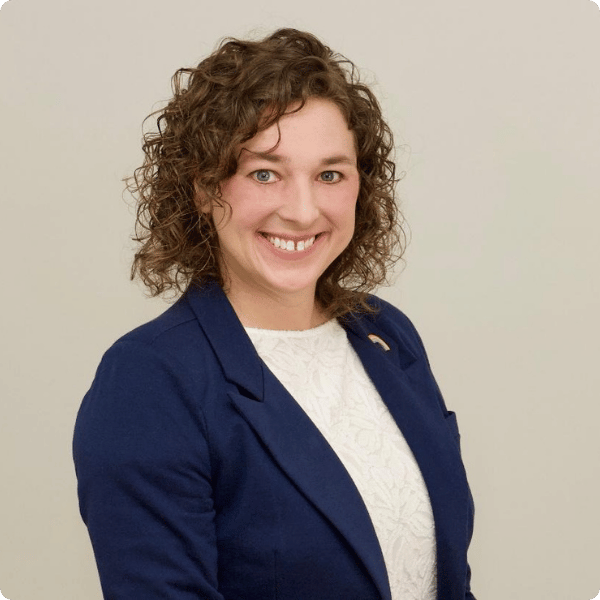
Civic Science Fellowship Project: Developing a strategic roadmap to strengthen public engagement across the physics community and beyond
Museum connections: Previously, as Executive Director of the Ohio Valley Museum of Discovery, Jen partnered with local communities to design place-based STEAM programs and expand access for rural families.
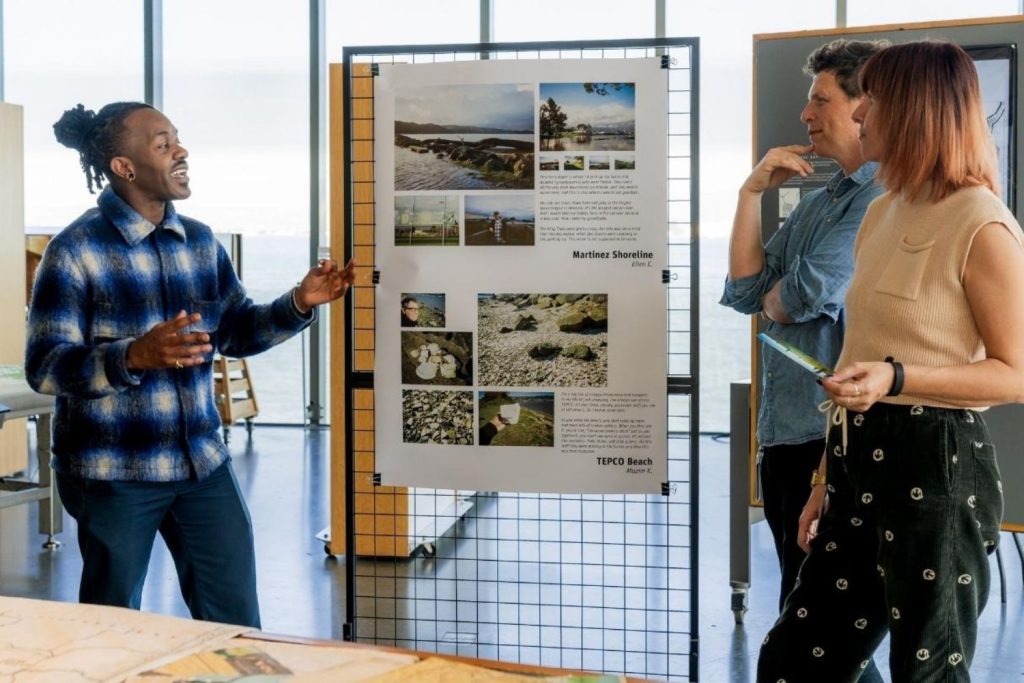
Civic Science Fellowship Project: Mulika was part of the Climate and Landscapes team, which engages and educates various interest-holders through exhibits that show how sea level rise is impacting the San Francisco shoreline.
Strength in place-based stories: These exhibits will be installed on the public-facing plaza, free to the public, and will aim to engage all sensory channels, including elements of facilitation. This storytelling aspect of local sea level rise impacts and observations will rely on perspectives from shoreline environmental justice communities, ongoing adaptation and mitigation strategies by various interest holders, as well as historical and ecological trends. His fellowship project was developing one of these exhibits, titled Bay Stories.

In what follows, we offer a collaborative definition, understanding, and application of CS within the context of science centers and museums and explore opportunities for furthering the practices that might sustain CS in our institutions.
Defining Civic Science
Civic science (CS) is an emergent term that describes “broad public engagement with the issues that arise at the many intersections between science and society”.2 A CS approach requires a shift in how science and scientists are positioned within public life, emphasizing their need to be embedded in both relationships and social contexts. Though our experiences share some commonalities, the variety in our definitions reflects that CS is a boundary-spanning practice that intentionally names and includes multiple perspectives and voices.
What does “civic science” mean to you?
MULIKA: Civic science gives me a way of rooting my science work in community relationships and how I build [and sustain] them, how I show up, and how I participate in these communities.
JESSICA: Civic science allows us to make the connections between science and society clear, which lets people put science into their own context and not the other way around. In doing so, it values people’s identities and lived experiences as essential to the practice of science throughout the process and not as an afterthought.
JEN: As both a field and a practice, CS prioritizes engaging various publics to understand and solve wicked problems. That requires acting in a way that’s trustworthy and making decisions together based on shared values.
TERRI: Civic science is an interdisciplinary area of inquiry and practice that expressly centers discussion related to “the public good”—and what constitutes “the public good”—as part of the practice of science.
Science Centers, Museums, and Civic Science
Science centers and museums are well poised to do civic science work, and many have rich histories of doing so by engaging audiences using the tools, theoretical perspectives, and communities of practice that elevate public questions and concerns. Just as science centers and museums vary in their engagement with community science or narratives about connections between science and society, so, too, each fellow took up different facets of science center and museum practice.
What have you learned from your CS projects with science centers and museums?
TERRI: In my role at the Association of Science and Technology Centers, I had the privilege of learning from dozens of science centers, museums, and public engagement organizations working in concert to “cultivate a culture of hope and action for planetary health.” At the same time, what “planetary health” means, how it manifests, and what it might entail to achieve one’s “planetary health goals” varies widely. Part of the work is wrestling with the multiplicity of meanings (and practices) that inform a museum’s planetary health endeavors, not to flatten or arrive at a singular “answer” to the questions implied above, but to foreground that such negotiation of meanings is itself a vital part of the work.
MULIKA: At the core of my project was Photovoice—a participatory research approach where community members used disposable cameras to document local concerns, assets, and climate impacts. My co-director and I engaged 35 participants from San Pablo and Suisun Bays to the Inner East Bay and East Palo Alto. Through follow-up interviews, participants shared captions and reflections revealing their firsthand experiences with rising seas. Because these photos highlighted familiar Bay Area landmarks, they allowed us to spotlight layered, often invisible environmental justice challenges. This approach grounded our findings in local knowledge and ecological timelines, exposing the lack of political and economic will behind robust climate adaptation. Ultimately, we aim to elevate Photovoice as an accessible tool for building public awareness and community stewardship of the Bay.
JESSICA: In my project at The Franklin Institute, we utilized CS principles for the co-creation of an environmental science resource suite with middle school educators. Typical standards-based curriculum tends to shy away from using real-world problems, as their complexity can distract from the intended focus of the phenomena it is trying to explain. However, led by teachers’ interest in developing students’ ability to see themselves as scientists and environmental stewards in their communities, we created tools that utilize a place-based civic science framework to accomplish the environmental literacy standards expected in the classroom. This approach and framework provided a basis for how we could meet the science standards while also reflecting authentic, relatable teacher and student identities and experiences in the classroom.
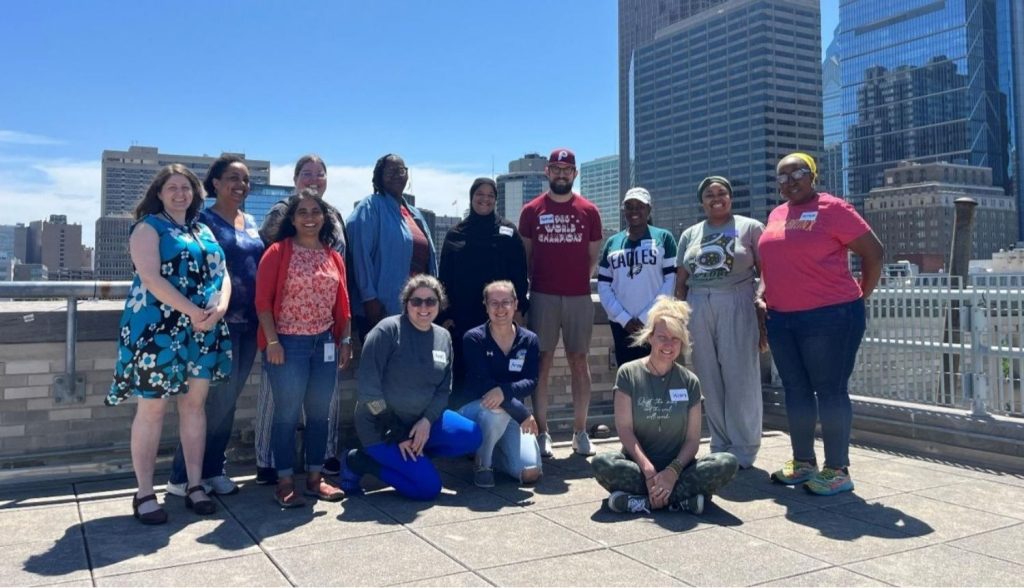
Civic Science Opportunities, Challenges and the Path Ahead
Civic science, like any emerging field, will continue to change as it confronts challenges and refines its approach.
Notably, the field exists within historic and systemic structures at institutions that may not be built to maintain CS, even as contemporary efforts attempt to remedy exclusions and past harm. In recent years, new barriers have arisen due to a multiplicity of converging crises, and our field has felt those impacts, particularly within the education and funding landscape. Pressures on science centers and museums can result in gaps between the endorsement of CS principles and the infrastructure needed to support the work. For example, Civic Science Fellows typically serve an 18-month term with their organization. Although fellows are occasionally hired permanently after their tenure, the more common realities of turnover and transition jeopardize the sustainability of civic science work.
So, what does the path forward entail for science centers and museums to sustainably weave CS values and practices into the fabric of their institutions? We offer some suggestions based on our experiences as fellows, aligned with the five pillars of CS (see right).
Five Pillars of Civic Science Learning
- Understanding science in context: Examining the societal factors that influence its contours and application and grappling with the ethics of decision-making related to science.
- Designing for equity and inclusion: Working to understand and identify approaches to combat structural factors that lead the practice of science, science engagement, and decision-making around science to benefit and include some social groups over others.
- Communicating for the future: Exploring ways of building knowledge, tools, and skills to effectively open lines of connection between science, individual and community priorities, values, curiosity, and ways of knowing.
- Scaffolding for learning and impact: Exploring ways of building knowledge, methods of engagement, paths toward change, and evaluation frameworks to help guide each stage of civic science project development.
- Leading for systems change: Cultivating approaches individuals and teams can adopt to spark civic science change at the level of structures, culture, networks, and norms.
What suggestions would you offer science centers and museums based on your experience as a fellow aligned with the pillars of civic science?
TERRI: Leading for systems change. To me, a critical component of this pillar is its emphasis on “structures, culture, networks, and norms.” Expressly naming “structures, culture, networks, and norms” matters because their inclusion in this definition has implications for where and how to focus one’s efforts and signals the importance of attending to power, resources, and beliefs (among other areas of emphasis).
Science centers and museums can—and should—engage with systems change at all of these levels. “Structures,” for example, can span from classrooms to legal institutions. “Culture” means attending to the symbols, language, and images science centers and museums create and circulate. Some efforts may be directed to immediate forms of remedy and action; other significant efforts are grounded in the recognition that many worthwhile endeavors build towards change in ways that will not always be apparent instantaneously. Leading for systems change means making space for all of these efforts.
JEN: Leading for systems change. Embedding and sustaining civic science within science centers, museums, and scientific organizations requires leadership to recognize CS as an institutional commitment rather than a single project or program. Buy-in across departments emerges when CS is connected to core infrastructure, strategic priorities, decision-making processes, staffing, education, and evaluation systems. Leadership can support staff across departments to see CS as an integral part of their role in advancing authentic, trusting relationships with the communities they serve. Over time, shifts in priorities and organizational practices move CS from a “nice-to-have” add-on to a more durable and sustaining part of how the science center operates.
MULIKA: Communicating for the future. Communication seems simple because we use it every day to share and understand information. But in reality, science communication often misses the mark. For those working in civic science, it is time to look closely at why it is so hard to get support for this work. We also need to address deeper systemic issues that have turned communication into a tool for propaganda or profit, rather than a clear way for the public to get answers and facts.
JESSICA: Designing for equity and inclusion. Equity and inclusion are central to the mission of many science centers and museums in their work providing access to science for all who come through their doors. Even more so, the field has already established networks that promote equity and inclusion (e.g. If/Then, Seeding Action, etc.) so there are structures in place for science centers and museums to integrate with and contribute to the growth and sustainability of CS. Additionally, embodying CS principles can also provide institutions an inclusive framework they can apply to future work, both in-museum and with their communities, particularly when engaging communities who have been historically excluded from and marginalized in science and its endeavors.
Joining the Conversation
The growing field of CS, guided by the pillars and embodied in the work of the CSF program and its network, aligns with science centers and museums’ mission to engage all people in the practice of science. Not only does the CS field reflect what our institutions have done well in nurturing public trust, but CS can also equip us with the tools to continue engaging our communities in asking and answering questions about science and its relationships to the public good. As the CS field continues to crystallize, the perspectives and experiences of science centers and museums will be a vital contribution to connect the philosophy of CS to real-world implementation.
If you’re interested in learning more about civic science, the CSF program and network, and how to put this approach into practice, here are a few resources to start your exploration:
- Sign up for the Civic Science Series newsletter highlighting perspectives, stories and work of the CS network.
- Explore the CSF Resources Collection, including research, case studies, tools and more that can help inform CS efforts.
- Team Civic Science is currently editing a Capstone of the 2024-25 Civic Science Fellows. This report will provide an overview of the CSF program and its history, reflections and experiences of the 24-25 cohort, and guiding lights towards a vision of the future of CS. The Capstone is currently in progress and updates will be relayed via the CSF website.